• Service
Standby generators
Power when the grid drops.
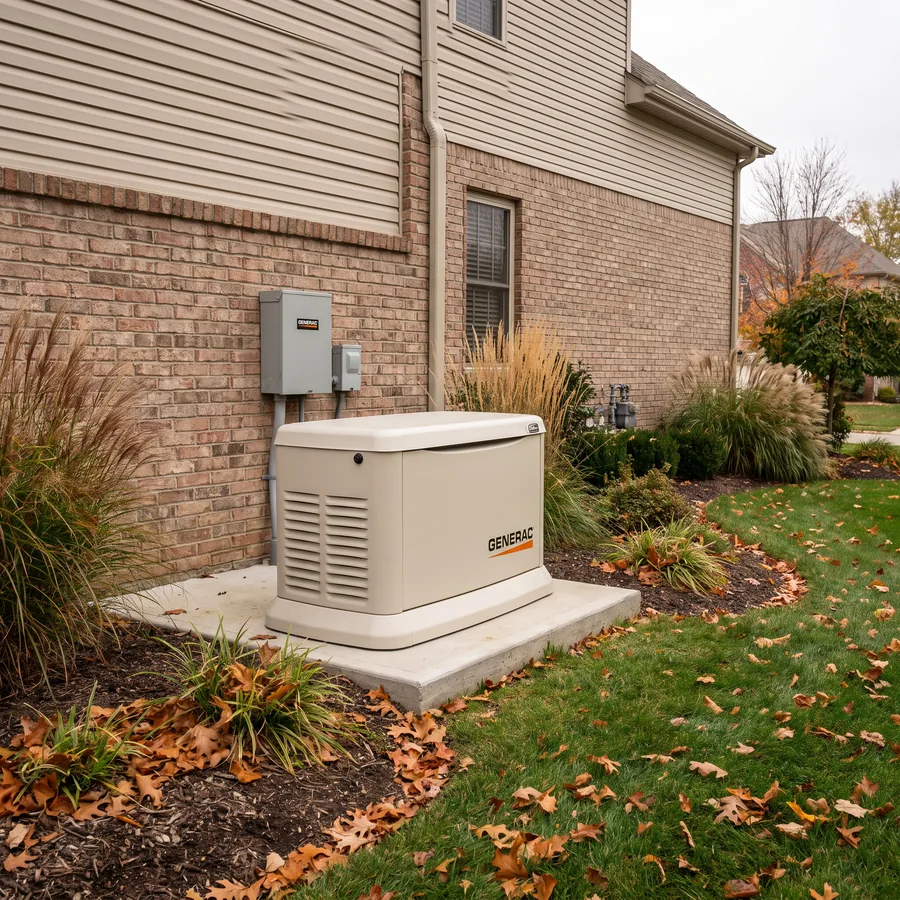
Buffalo winters and lake-effect storms make backup power a practical conversation. A properly planned standby system can support the household loads you choose when utility power is unavailable.
We review the home, the equipment, and the loads that matter most, then plan the generator and automatic transfer equipment around that real-world need.
Scope of a typical install.
- On-site conversation about the loads you want to support during an outage
- Generator sizing and equipment plan based on the home and selected backup needs
- Fuel-supply coordination discussion when natural gas or propane is part of the system
- Pad, placement, transfer equipment, and electrical routing planned for the property
- Automatic transfer equipment integrated with the electrical service as the project requires
- Startup and load-transfer testing after installation
- Owner walkthrough covering operation and manufacturer-recommended maintenance
- Permit and inspection coordination when required by the project or jurisdiction
Priorities
Start with the equipment and rooms that matter most during an outage: heat, sump, refrigeration, lighting, communications, or other critical loads.
Electrical capacity
We assess how the backup equipment relates to the existing panel and whether other electrical work should be planned at the same time.
Site conditions
Placement, routing, fuel coordination, and the relationship to the home are discussed before the installation is finalized.
Care after install
Manufacturer maintenance requirements and the right service plan can be discussed as part of the handoff.
Keep the lights on next time.
Free estimates across Buffalo & Western New York.
Tell us what you want to keep powered during an outage and whether the home already has a generator in mind.